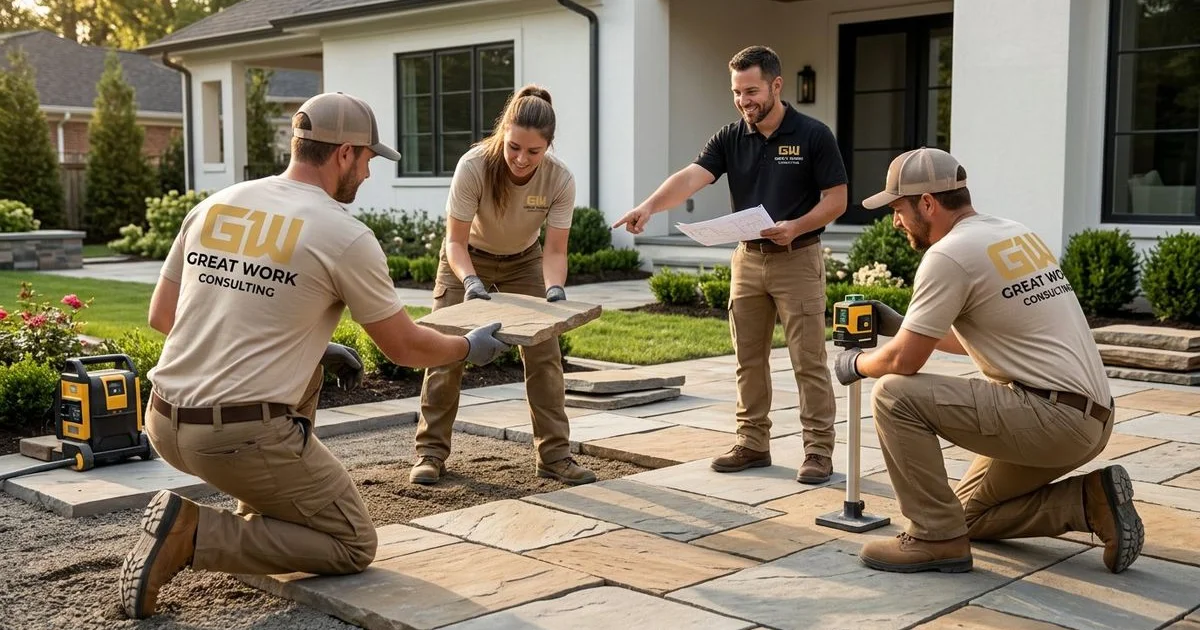
Our consulting team regularly tackles the core challenge of Hiring for Contractor Businesses: How to Find, Vet, and Keep Good Crew Members. The skilled trades labor shortage is a daily operational hurdle for US companies today. A 2026 report from PeopleReady reveals the construction industry needs to attract an estimated 349,000 net new workers this year just to keep pace with demand.
Finding reliable people is the true bottleneck restricting your revenue.
We consistently see that successful contractors treat recruiting as a continuous system. They build a pipeline of potential hires instead of scrambling to fill a spot after someone quits on a Friday. Let’s examine the data behind these hiring struggles and walk through the exact framework our clients use to attract top talent.
The Secret to Hiring for Contractor Businesses: How to Find, Vet, and Keep Good Crew Members
The typical contractor hiring process usually triggers only after a sudden resignation. A quick Craigslist ad goes up, ten unqualified responses roll in, and the least bad option gets the job. That person lasts three months, and the painful cycle begins again.
This constant churn drains your bank account in ways that fail to show up on a standard profit and loss statement. The U.S. Department of Labor estimates that the cost of a bad hire can equal up to 30% of that employee’s first-year earnings. For a specialized worker making $80,000 a year, that translates to a $24,000 loss.
Our team categorizes these hidden expenses into three main areas:
- Lost Productivity: Crews must slow down to accommodate the weakest link.
- Costly Rework: Mistakes from an unqualified hire consume extra materials and skilled labor hours to fix.
- Cultural Erosion: High performers become frustrated and leave when forced to constantly pick up the slack.
The only fix is building a proactive recruiting system that operates year-round.
Building Your Recruiting Pipeline
Good crew members rarely sit at home waiting for your job ad to appear. They already work for someone else. Your primary goal is to make your company visible and attractive to these professionals before they actively decide to leave their current employer.
Where to Find Candidates
You need to diversify your candidate sources to build a reliable pipeline. Our top clients use a mix of traditional and digital channels to maintain a steady flow of applicants.
- Trade schools and vocational programs: Build relationships with local programs like SkillsUSA. Offer to sponsor a student or host site visits to get first access to motivated graduates.
- Social media recruiting: Use Meta Business Suite to run targeted local ads on Facebook and Instagram. Highlight completed projects, crew photos, and job completion celebrations to attract workers who want to be part of a winning team.
- Trade-specific job boards: Skip the general classifieds and post on platforms built specifically for the industry. Skillit, a construction-specific hiring platform, boasts over 190,000 vetted craft professionals in 2026. ConstructionJobs.com is another excellent specialized option.
- Employee referrals: Your best employees know other reliable people. Offer a $500 to $1,000 referral bonus paid after the new hire completes 90 days.

Your Job Posting Matters
Most contractor job postings fail to give candidates a compelling reason to apply. A generic line like “Experienced landscaper needed” tells a candidate absolutely nothing about why they should choose your company over three other local competitors.
We recommend being highly specific about compensation and company culture. As of March 2026, ZipRecruiter data shows the average US construction laborer earns around $21 an hour. If you pay above market rate, state it clearly in the headline.
A high-converting job posting always includes these elements:
| Essential Job Post Element | Why It Matters For Candidates |
|---|---|
| Specific Pay Range | Establishes immediate trust and filters out mismatched expectations. |
| Benefits and Perks | Highlights health insurance, paid time off, and tool allowances. |
| Growth Opportunity | Outlines a clear path to crew lead or foreman. |
| Company Culture | Explains what separates your shop from a burn-and-churn environment. |
Vetting Candidates Properly
Accepting a warm body with a pulse is a guaranteed path to a bad hire. Lowering your standards costs far more in the long run than waiting for the right person to arrive.
The Interview Framework
Our interview process relies on the STAR method (Situation, Task, Action, Result) to evaluate past behavior. Structure your conversations around three critical areas.
- Skills assessment: Ask highly specific technical questions. For a hardscape laborer, ask them to walk you through prepping a base for a paver patio.
- Reliability check: Ask about their last three jobs and why they left. A clear pattern of leaving four jobs in two years will likely continue with your company.
- Cultural fit: Describe your company standards honestly. Ask if they are comfortable starting at 7 AM and cleaning up the job site every single day.
Working Interviews
Nothing beats a working interview for trade positions. Invite the candidate to spend a half-day on a job site with your best crew. You will learn more about their work ethic and attitude in four hours of actual work than in an hour of standard interview questions.
Make sure to stay compliant with the Fair Labor Standards Act (FLSA) by paying them for their trial time. Offering $20 to $25 an hour for the trial day is a tiny investment that prevents a costly long-term mistake.
Reference Checks
Actually call the references provided by the candidate. Ask one specific question: “Would you rehire them?”
Any hesitation on the other end of the line gives you your answer. We also highly recommend using a modern FCRA-compliant background check service like Checkr. This tool allows you to run fast, accurate verifications directly from a mobile dashboard, keeping your hiring process moving quickly.
Onboarding That Sets New Hires Up to Succeed
The first two weeks dictate whether a new hire stays for years or leaves in a month. Throwing a new employee onto a crew with the vague instruction to “follow that guy” is abandonment, not onboarding. According to the Society for Human Resource Management (SHRM), a structured onboarding program can improve employee retention by 82%.
We build a 30-day integration plan for every new hire.
- Week 1: Pair the new hire with your best crew lead. Cover all safety procedures, equipment operations, and daily workflows.
- Week 2: Start assigning independent tasks under close supervision. Provide direct feedback at the end of each day.
- Weeks 3 and 4: Gradually increase their responsibility.
Check in formally at the end of week two and week four to discuss performance. A structured approach from our operations consulting framework addresses this critical transition directly. People rarely leave companies; they leave unclear expectations and unsupported environments.
Retention: Keeping Your Best People
Recruiting costs money, but retention generates true return on investment. Keeping your best people requires intentional effort and consistent support.
Our most successful clients implement these specific retention strategies:
- Pay competitively and transparently: Know the 2026 market rate for every position and pay at or above it. Review wages annually instead of waiting for someone to threaten to quit.
- Invest in formal training: Sponsor industry-recognized credentials. Paying for a worker to complete their OSHA 30-Hour Construction course or an NCCER certification shows you value their long-term career.
- Create advancement paths: Document the journey from laborer to skilled installer to crew lead. People stay when they can visualize a secure future.
- Provide quality equipment: Forcing a crew to work with broken tools screams disrespect. Good equipment functions as both a recruitment and a retention tool.
- Respect work-life balance: Mandatory 60-hour weeks quickly burn people out. Offer consistent schedules and actual time off to recharge.
Building a Bench
The ideal time to hire is when you do not urgently need someone. Keep a running list of sharp, motivated people you meet at supply houses or industry events.
“Your best future hires are often the professionals you meet casually today. Nurture those connections before you need them.”
This active bench gives you a massive advantage. We advise using a simple Customer Relationship Management (CRM) tool or a spreadsheet to track these contacts. Check in with them periodically to see how their current job is going.
When a position finally opens, you already possess a warm list of candidates to call. You can move incredibly fast because the relationship already exists.
The Cost of Getting This Wrong
Every time you lose a good crew member and replace them with a bad one, your business bleeds productivity and quality. Turning down a $40,000 project because your crew is short-staffed represents revenue you will never recover.
Mastering Hiring for Contractor Businesses: How to Find, Vet, and Keep Good Crew Members must function as a core pillar of your business. Treat it with the same focus you give to sales and operations. Build a proactive system, run it consistently, and watch your capacity expand.
Struggling to find and keep good crew members? Book a free Contractor Business Audit and we will help you build a hiring system that attracts and retains the people your business needs to grow.