We consider Beating the Busy Season: Operational Workflows for Outdoor Living Contractors to be the most critical topic every April.
The phones start ringing nonstop for patio installations and outdoor kitchens.
Every homeowner wants their project finished before Memorial Day.
Our professional service team watches contractors go from wondering where the next job will come from to wondering how they will survive the workload.
This surge in demand is a massive opportunity.
The U.S. landscaping market hit $184 billion in 2025 and is projected to climb to $196 billion in 2026.
We know you need exact strategies to capture that revenue without losing your sanity.
Let’s look at the data to understand why profitability often drops.
The root causes are entirely preventable with the right approach.
Our team will break down these margin killers and provide a practical plan to scale your operations smoothly.
Why Most Contractors Lose Money During Their Busiest Months
It sounds counterintuitive, but many outdoor living contractors actually see their profit margins shrink during peak demand. Revenue goes up rapidly. We frequently see hidden costs like overtime labor and emergency material orders destroy profit margins. Design and build projects can command 25% to 40% net profit margins in the current market.
A lack of operational structure often pushes those margins down to 5% or lower. Our experience shows that the business is usually set up to handle a comfortable workload instead of a peak workload. When demand doubles, every system that barely worked at normal volume completely falls apart.
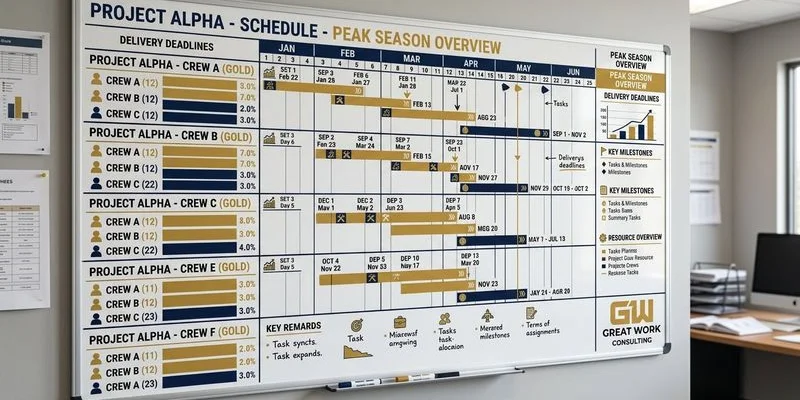
Estimating takes too long because the owner is the only person who can produce proposals. We watch crew productivity drop because supervisors are spread across too many active sites. Collections slow down because nobody has time to send invoices. The solution is not to work more hours. Our advice is to build strong workflows before the busy season starts so your business can absorb increased demand.
The following table highlights the difference between an optimized business and a struggling one. Review these numbers to see where your operations stand.
| Metric | Optimized Workflow | Poor Workflow |
|---|---|---|
| Net Profit Margin | 15% to 20% | 5% or lower |
| Estimating Time | 30 minutes | 3+ hours |
| Crew Supervision | Focused, single site | Spread across multiple sites |
Pre-Season Preparation: January Through March
We know the busy season is won or lost during the slow months. Use the off-season to build the systems that will carry you through peak demand. This preparation phase sets the foundation for your entire year.
Standardize Your Estimating Process
Our favorite strategy is building estimate templates for your most common project types like patio installations and retaining walls. Producing an estimate takes three hours of custom work if you start from scratch every time. You will never keep up with demand when you receive five estimate requests per day in April.
We highly recommend creating a pricing sheet that your team can use to build accurate quotes. Include material costs with current supplier pricing and standard markup percentages. Many successful contractors compare field service software to speed up this process.
We see many operators choosing Jobber for its flexible mobile quoting, while others prefer LMN for its highly detailed landscape budgeting tools. Delegating estimating to a project manager frees you to focus on closing deals. This shift is mandatory for growth.
Hire Before You Need To
Our data shows the worst time to hire is when you are already behind. According to a January 2026 report from Associated Builders and Contractors, the U.S. construction industry needs 349,000 new workers this year just to keep pace with demand. Finding good help is harder than ever.
We suggest starting your recruiting efforts in February to beat this massive labor shortage. Run ads, reach out to trade schools, and talk to your material suppliers about who they know. Having one extra crew member trained and ready on April 1 is worth far more than scrambling to find someone in May.
Our teams often hire seasonal labor for material handling and site cleanup. Experienced crew members can then focus entirely on skilled installation work. This keeps your highest-paid workers doing the tasks that directly generate revenue.
Lock In Material Pricing and Availability
We emphasize contacting your primary suppliers in January to place pre-season orders for your highest-volume materials. Locking in pricing early protects you from mid-season price increases. Supply chain issues still pop up unexpectedly.
Our clients confirm availability early to prevent the nightmare of discovering a preferred paver is backordered six weeks into the selling season. Build relationships with backup suppliers for critical materials. When your primary vendor drops the ball, having a second source ready means a simple phone call instead of a project delay.
Peak Season Workflows: April Through October
We see your focus shift from preparation to execution once the busy season hits. The systems built during the off-season now need to run smoothly. You are managing the highest volume of work your business handles all year.
Weekly Planning Sessions
Our most successful contractors block 90 minutes every Sunday evening or Monday morning for a weekly planning session. Review every active project, every upcoming start, and every estimate in your pipeline. This single habit will prevent more scheduling disasters than any software tool.
We advise answering a specific set of questions during this meeting.
- Determine which projects will be completed this week.
- Identify which new projects are starting and whether materials are confirmed.
- Our recommended checklist also includes checking for crew conflicts across job sites.
- Assign responsibility for the estimates that need to go out.
- Address any customer issues before they escalate.
Tighten Your Scheduling Buffer
We always caution against packing your schedule as tightly as possible to maximize revenue. Resist this temptation during peak season. An overpacked schedule means that one rain day creates a cascading chain of missed commitments.
Our standard practice is building a minimum two-day buffer between project completions and new project starts. This buffer absorbs weather delays effectively. Crews get time for punch list items, preventing the frantic scrambling that leads to quality problems and customer complaints.
Delegate Ruthlessly
We know your business cannot grow if you are still running a crew, producing every estimate, and answering every customer call. Peak season demands that you step out of production and into management. Identify the three to five tasks that only you can do, like closing sales and making strategic decisions.
Our operations consulting team specializes in helping contractor owners build delegation systems. Your crew leads should be managing daily field operations. Your office staff or virtual assistant should be handling scheduling confirmations and invoice follow-up using platforms like Service Autopilot or Aspire.

Managing Customer Expectations During Peak Demand
We consider over-promising and under-delivering to be one of the biggest risks during busy season. The phone is ringing constantly. It is tempting to say yes to every request and promise aggressive timelines to close the deal.
Set Honest Timelines
Our experts strongly recommend telling customers upfront if your earliest available start date is six weeks out. A 2024 Houzz report showed a 50% surge in demand for outdoor spaces, pushing contractor timelines out significantly across the US. Most homeowners who are serious about their project will wait for a contractor they respect.
We find the ones who refuse to wait are often the price-shopping, high-maintenance customers you do not want anyway. An honest timeline sets proper expectations and dramatically reduces mid-project frustration. A customer who expects to start in six weeks and starts in six weeks is happy.
Prioritize Communication
We stress that your communication systems matter more than ever during the busiest months. Send weekly project updates with photos. Respond to customer inquiries within four hours.
Our data indicates that over 35% of new landscaping business comes from repeat customers, while 26% comes from word-of-mouth. The contractors who communicate best earn the strongest reviews. Proactively notify customers about schedule changes before they have to ask.
Post-Season Review: The Most Overlooked Step
We see most contractors collapse on the couch when October arrives. The workload slows down, and everyone starts thinking about the holidays. The smart operators spend a week reviewing what happened during the season.
Our consultants always pull the financials to see which project types were most profitable. Tracking landscaping profit margins by service line is essential because mowing might be profitable while installation work silently loses money. Figure out where you lost money and why.
We use solid financial consulting practices to separate contractors who grow year over year from those who stay stuck.
Every lesson from this season becomes a system improvement for the next one.
Identify what operational breakdowns need to be fixed.
Beating the Busy Season: Operational Workflows for Outdoor Living Contractors
We are certain that mastering Beating the Busy Season: Operational Workflows for Outdoor Living Contractors does not have to be a survival exercise. The right preparation and workflows turn this period into a highly profitable time. You can generate the majority of your annual profit without destroying your health or reputation.
Our team wants to help you build an operational playbook that makes next busy season your most profitable yet. Book a free Contractor Business Audit today. Identify the bottlenecks in your current workflows and design systems that scale seamlessly.